No, none yet. I have been busy getting my Masters Proposal together and my head is filled with "Multimodal Literacy" and "Semiotic Chains" and some such things. If these terms do not make sense, don't worry, it's all about meaning-making. Actually the translation process from design to finish garment in the three major subjects in a Diploma in Fashion.
That being said, more God-related fashion-y stuff will follow soon. I have not run out of ideas yet. I am just not sure which direction to go - sub-cultures or accessories or current trends. Leave a comment and I will take it from there.
Tuesday, September 7, 2010

Wednesday, August 18, 2010
Accessories
Here is a brilliant alternative to the charm bracelet and standing up for purity in the process. Again, the story is taken from "Brining up Girls" by Dr James Dobson (2010) (for the purpose of this blog, I just want to paraphrase and not retell the entire story. Buy the book to read it. I found it to be the most touching part.) I know I did not write down the reference, for the original story, but the book was a gift for someone else, and although I read it, I do no longer have it :)
So, here is the story:
The other alternative is a Salvation bracelet, that can also be decked out with various gems.
 The colours are symbolic and represent the story of salvation (a very good talking point if people should ask)
Black: Sin, which separates us from God
Red: The blood of Christ, when He died for us.
Blue: Baptism - when we receive Christ and show our faith
Green: Our spirit grows in love for Him
White: We are made pure through forgiveness
Gold: Heaven, where the streets are paved with gold.
So, here is the story:
On her 16th birthday the woman, who tells the story, was taken by her parents to her favourite restaurant to officiate an agreement between her and them to being able to finally date. The agreement was that she could date any guy she wanted, and being a child of God had to agree to keeping pure in the following way:Lets think about that a while - I'm not advocating we should spend the amount of money that her dad spent on her, but every cent was worth it, in the end. I do think, however if you want to make this a tradition, the stones need to be expensive and not just pieces of glass because it needs to hurt when you give the gem away.
Her dad handed over a charm braclet: Gemstone after gemstone was revealed on a silver bracelet. There were 6 gems, each diferent interspersed with 6 smaller ones in between (sapphires). The six different ones were 1) a piece of polished granite, 2) pink quarz, 3) an emerald, 4) a pearl, 5) a ruby and 6) a diamond.
All gems were symbolic: the six sapphires were there to remind her how beautiful and valuable she is to God and her parents. The granite was for the first time a guy held her hand, the quarz for her first kiss, the emerald for her first boyfriend, the pearl for the first time she said "I love you" to a guy other than her dad, the ruby for her first engagement and the diamond for the first time she will say "I do".
The deal, however was becomming more complicated. She had to remove the gem and hand it to the guy who held her had, kissed her, etc etc. She was feeling valued beyond belief, but I think her parents were very intelligent, because if she could not find it in her heart to hand over the gem, she could not give away the things they represented. She learned this lesson very fast - as quick as a few weeks later when I guy wanted to hold her hand and she could not see herself part with a piece of granite. Needless to say, she met a guy who admired her bracelet and never tried to do anything but ask her to marry him and on her wedding day she handed over the entire bracelet to him. Now her daughter is wearing it.....
The other alternative is a Salvation bracelet, that can also be decked out with various gems.

Black: Sin, which separates us from God
Red: The blood of Christ, when He died for us.
Blue: Baptism - when we receive Christ and show our faith
Green: Our spirit grows in love for Him
White: We are made pure through forgiveness
Gold: Heaven, where the streets are paved with gold.
Tuesday, August 17, 2010
Modesty Part 3 (an Apology)
Apologies and corrections....
I have written previously about Pure Fashion, without actually knowing the real story behind it. I think I was quite critical of some of the outfits shown, but when I read the real reason behind Pure Fashion, I need to apologise and write it here.
I have taken this excerpt from Dr James Dobson's book "Bringing up Girls" (2010) - from the article "Standing Up to 'Girls gone Wild' Culture " by Michelle Malkin, as quoted by him:
Well done!! I may have been too critical and judgmental and salute the effort of this courageous 11 (probably 13 year-old) to stand up for her faith and challenge the status quo of the fashion industry that prescribes what girls should wear.
I have written previously about Pure Fashion, without actually knowing the real story behind it. I think I was quite critical of some of the outfits shown, but when I read the real reason behind Pure Fashion, I need to apologise and write it here.
I have taken this excerpt from Dr James Dobson's book "Bringing up Girls" (2010) - from the article "Standing Up to 'Girls gone Wild' Culture " by Michelle Malkin, as quoted by him:
First, let me tell you about my new hero. Her name is Ella Gunderson, and she's a student at Holy Family Parish School in Kirkland, Washington. As reported in the Seattle Times a few months ago, Ella recently wrote a remarkable letter to the Nordstom's department store chain.
"Dear Nordstrom," she began. "I'm an 11-year-old girl who has tried shopping at your store for clothes, in particular jeans, but all of them ride way under my hips, and the next size up is too big and falls down. They're also way too tight, and as I get older, show everything every time I move. I see all of these girls who walk around with pants that show their belly button and underwear. Even at my age I know that that is not modest. With a pair of clothes from your store, I'd walk around showing half of my body and not fully dressed... Your clerk suggested there is only one look. If that is true then girls are supposed to walk around half naked. I think maybe you should change that."
All it took was one little girl to speak her mind about the excesses of our "Girls Gone Wild" culture. And guess what? The market, in a small way responded. Nordstrom executives wrote back and pledged to young Ella Gunderson that they would broaden the clothes for girls. "Your letter really got my attention," wrote Kris Allan, manager of the local Nordstrom's where Ella shopped. "I think you are absolutely right. This look is not particularly a modest one and there should be choices for everyone."...
Here's the best part. She and her friends didn't wait around for Nordstrom's (sic) to change its inventory. With help from the mom and 37 of her classmates, Ella organised a fashion show to model decent clothes for girls aged 10 to 16. The sold-out show, called "Pure Fashion", drew a crowd of 250; two other clothing stores donated modest clothes; the girls got a standing ovation; and the event raised money for the Catholic Challenge Club network, which encourages young girls to stand up for their faith and their values in an increasingly secular and hostile world.
Well done!! I may have been too critical and judgmental and salute the effort of this courageous 11 (probably 13 year-old) to stand up for her faith and challenge the status quo of the fashion industry that prescribes what girls should wear.
Thursday, August 12, 2010
Indigo
I have written about indigo before .... mentioning that it was produced from a marine snail, but at the same time indigo can also be obtained from the indigo plant. The entry on Wikipedia has quite a bit of information. it is a purplish-blue colour and usually quite expensive when manufactured from one of the two organic sources.


I'm more interested in the use in fashionable garb. The most fascinating use is for the traditional garments worn by the "Blue men of the desert".

 The indigo in their clothing is not dyed in the usual way, since water is scarce. Therefore the indigo is pounded into the fabric, instead of boiled, giving the fabric a beautiful sheen (as seen in the picture above), but as the garment is worn, the dye rubs off onto the skin as can be seen in the pictures below. Because indigo is an expensive dye, it has become a status symbol amongst the Tuareg; the bluer the skin, the richer the wearer. The Tuareg have always fascinated me and only after visiting quite a few sites did I come across the fact that the Tuareg use the indigo plant to dye their clothes.


Other African tribes use indigo for items like the one below.

The most famous piece of indigo clothing we know, is denim (on which I will have to do another post).
Denim has been warp dyed, meaning that only the warp threads (the ones that run length-wise) have been dyed with the blue. Since the end of the 19th century synthetic dyes have replaced organic indigo, and linked mostly with practical fabrics and work clothes. Further information can be found here...
In the Bible, indigo is not mentioned by name, but whenever the cloth is dyed "purple" or blue, probably indigo was used. You can see that there are quite a number of references and each of them is found in relation to Kings, wealth or at least denoting some indication that the cloth was expensive. I have mentioned before that the "Proverbs 31 woman" is a trader in purple cloth, i.e. she is so rich that she can support her family so that they lack nothing.
As part of the rainbow, it is one of those colours that appear, but that people cannot usually distinguish from purple, or even see on the colour chart, because we divide the chart into three and then further into 6 (and not 7). Indigo sits between the blue and the purple on the colour chart and as such, is a beautiful colour, if you look at the reference in Wikipedia.
There is not much more to say.... happy browsing through the websites


I'm more interested in the use in fashionable garb. The most fascinating use is for the traditional garments worn by the "Blue men of the desert".

Picture from: "Colors of Africa" by Duncan Clarke

Other African tribes use indigo for items like the one below.

Indigo resist dye, hand-spun cotton; Dyula peoples, Bobo-Dioulasso region, Burkina Faso, 1990's
Taken from "The Art of African Textiles" by Duncan Clarke
Taken from "The Art of African Textiles" by Duncan Clarke
All other pictures taken from this website
Denim has been warp dyed, meaning that only the warp threads (the ones that run length-wise) have been dyed with the blue. Since the end of the 19th century synthetic dyes have replaced organic indigo, and linked mostly with practical fabrics and work clothes. Further information can be found here...
In the Bible, indigo is not mentioned by name, but whenever the cloth is dyed "purple" or blue, probably indigo was used. You can see that there are quite a number of references and each of them is found in relation to Kings, wealth or at least denoting some indication that the cloth was expensive. I have mentioned before that the "Proverbs 31 woman" is a trader in purple cloth, i.e. she is so rich that she can support her family so that they lack nothing.
As part of the rainbow, it is one of those colours that appear, but that people cannot usually distinguish from purple, or even see on the colour chart, because we divide the chart into three and then further into 6 (and not 7). Indigo sits between the blue and the purple on the colour chart and as such, is a beautiful colour, if you look at the reference in Wikipedia.
There is not much more to say.... happy browsing through the websites
Thursday, July 22, 2010
Modesty Part 2
In the last few days I have come across a really good blog that shows some sewing skills and draping skills. The lady who blogs uses vintage design (mostly from the 50's) for all the outfits she sews.
Her post on a recent project seems to have sparked a lot of interest in a discussion / commenting of modesty in general. So, her post on modesty is seen from a feminist point of view and does not take into account that the survey she slates are not commands, but statements that men / boys reacted to. I think the most revealing results are the open questions that the boys / men answered which show the actual heart of Christian men and their struggles.
The one criticism that came through strongly on the sewing blog comment section, was that women were not asked the same questions as well as questions about men's attire. I think that is a valid point, but when we think about it, women will dress modestly if men don't accept immodesty as a standard and vice versa.
What I read recently in Dr James Dobson's book "Bringing up Girls" is that girls think they are in control when they get the attention of the boys and then sleep with them, because they feel loved. However, the cycle continues if this happens more than once and the more it happens, the less loved the girl feels. The reason for this is, the boys get what they want without commitment and girls get nothing except pain. Dr Dobson makes the point that this is the worst form of male power, even though girls think that they actually are empowered.
Gertie confuses modesty with morality and religious superiority. This is something even Christians do. We can come across as being more spiritual, more moral or even show our superiority by the way we act, but in essence that is not the main point. Gertie argues that modesty is linked to religion and culture and she is correct, but at the end of the day, the question remains: Are we more moral when we can dress the way we want and even go without or entice men's minds to lust after us? Is modesty only one-sided and placed as an oppression on women? I have addressed this issue before.
I think Gertie misses the point of modesty in general - it's not only women who need to dress modestly to protect the visual minds of men, but also men need to dress modestly to curb the imaginations of their female friends. It goes both ways and mutual respect is at the heart of it - "love your neighbour as yourself" and "treat every older woman as if she were your mother and every younger woman as if she were your sister". No wonder that Gertie finds the underlying ideas disturbing, partly I think because they are religious in nature and partly because only men took part in the survey. I think her last point:
[...] that doesn't give any of us the right to demean other women for choosing to show more skin. And, above all, we deserve respectful treatment from men no matter how we're dressed.is on judgmental attitudes in all of us. As Christians we need to be really careful of that no matter whether it is on dress styles or on beliefs or on lifestyles.
Monday, July 19, 2010
Blue
Second-last post in the series "All the colours of the Rainbow"
We all have had the blues, right? Funny how blue in the English language is associated with feeling depressed or "down", when blue skies imply sunshine and a happy day.
Being of German descent, I cannot resist giving the meaning for being blue in German: drunk. The Afrikaans combines the two states into "dronkverdriet" (drunken depression), but does not associate that state of affairs with being blue.
There is a German kiddies song that goes:
On a more serious note: the sky above is blue, and sometimes the lakes and rivers reflect the blueness to then also be drawn / photographed as blue. (Case in point - pictures taken from deviantart profile: alexandru1988 - go to his profile for some awe inspiring work)


In the Bible, blue and scarlet are often used in conjunction. I have discussed this already in the post on scarlet and actually noticed that scarlet, purple and blue are mentioned as one and the same colour, or at least quite close to each other in shade and intensity. I think, that there is quite a difference between what we would call indigo (purplish blue - think denim) and blue and scarlet (reddish), but in biblical times the shades probably depended on the kinds of dye and the concentration used in the solution. Also, perhaps how much the fabric was "bleached" in the sun or eventually worn - time fades the colours and leaves a redder tint rather than a blue one.
The point remains though, that scarlet, blue and indigo (purple) are all royal colours and were extremely expensive. In the references given you will see that blue and scarlet are mentioned in the garments of the priests as well, setting them apart from the rest of the population. Mostly fine linen was used to be dyed in these colours, making the priestly garments even more expensive.
Finally, as Christians, we are called to be a "royal priesthood" (1 Peter 2:9) and in that sense set apart for service to God, showing by our dress that we belong to him by not conforming to the world. This does not mean we are to be dressed in scarlet and indigo, but that we show by our differences that we belong to someone else.
We all have had the blues, right? Funny how blue in the English language is associated with feeling depressed or "down", when blue skies imply sunshine and a happy day.
Being of German descent, I cannot resist giving the meaning for being blue in German: drunk. The Afrikaans combines the two states into "dronkverdriet" (drunken depression), but does not associate that state of affairs with being blue.
There is a German kiddies song that goes:
Blau, blau, blau sind alle
meine Kleider,
Blau, blau, blau ist alles, was ich hab.
Darum lieb ich alles, was so blau ist,
Weil mein Schatz ein Seemann,
Seemann ist.
Blue, blue, blue are all
my clothes
Blue, blue, blue is all that I have
So I love anything that's blue
because my love is a sailor,
a sailor.


In the Bible, blue and scarlet are often used in conjunction. I have discussed this already in the post on scarlet and actually noticed that scarlet, purple and blue are mentioned as one and the same colour, or at least quite close to each other in shade and intensity. I think, that there is quite a difference between what we would call indigo (purplish blue - think denim) and blue and scarlet (reddish), but in biblical times the shades probably depended on the kinds of dye and the concentration used in the solution. Also, perhaps how much the fabric was "bleached" in the sun or eventually worn - time fades the colours and leaves a redder tint rather than a blue one.
The point remains though, that scarlet, blue and indigo (purple) are all royal colours and were extremely expensive. In the references given you will see that blue and scarlet are mentioned in the garments of the priests as well, setting them apart from the rest of the population. Mostly fine linen was used to be dyed in these colours, making the priestly garments even more expensive.
Finally, as Christians, we are called to be a "royal priesthood" (1 Peter 2:9) and in that sense set apart for service to God, showing by our dress that we belong to him by not conforming to the world. This does not mean we are to be dressed in scarlet and indigo, but that we show by our differences that we belong to someone else.
Monday, July 12, 2010
Modesty
After the book review, I felt I needed to do a post on modesty, since there seems to be a confusion (even amongst Christians) what that entails. I could say that it is "anything that does not offend someone else", but what does that look like? Mostly it is culture related. For example, in most African cultures it is unacceptable for a woman to (a) wear pants and (b) expose her knees when wearing a skirt.
So, what does modesty really look like in a society where states of undress are acceptable and leave nothing for the imagination?
My thinking centres on the following passage: (Romans 14:13-23)
Firstly, let me say that I do not equate eating and drinking with wearing clothes as a disputable matter (Romans14:1), but the principle of not being a stumbling block to fellow brothers (and sister) still applies.
Secondly, in the 21st century, what we see as acceptable in one country might not be acceptable in another and this continues to be an issue, especially for missionaries who want to make a stand for Christ.
Down to the nitty-gritty:
According to the Mormons (The Church of Jesus Christ and the Latter-day Saints) Modesty is:
Now for the visual people.... Pictures taken from the Pure Fashion website
 Picture 1 - Critique: I like the lady's outfit, but two things bother me: 1) the buttons down the front, which, when walking can pop off and 2) the skirt is a bit tight and does not lend itself to walking very well.
 Picture2: I like both outfits very much, but for an African context the skirt may be too short. This may be quite conservative in the United States, but still quite daring in other parts of the world.
 Picture 3: this is more like it.
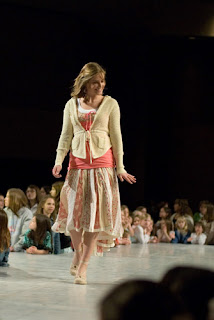 Picture 4: I really like this one too. The layered look works very well and the drooped hem of the skirt is a nice change.
 Picture 5: also very nice - pants are 3/4 and perhaps not everyone's cup of tea - acceptable in Western countries, but again, not all over the world.
I have not come across anything for the African market (local stores), but the rest of the world thinks that we are quite conservative anyway. Still, the changes are quite obvious to me when I reflect on the 80's and compare them to today's fashions. Apart from dropped waistlines on skirts and pants, the tops and skirts get shorter and shorter and most clothing got tighter.
If we continue to apply the principle of not being a stumbling block to others, we are going to do fine as long as we can critically examine our outfits ourselves, or ask others to help us with it if we don't feel we can exercise our own judgment.
So, what does modesty really look like in a society where states of undress are acceptable and leave nothing for the imagination?
My thinking centres on the following passage: (Romans 14:13-23)
13Therefore let us stop passing judgment on one another. Instead, make up your mind not to put any stumbling block or obstacle in your brother's way. 14As one who is in the Lord Jesus, I am fully convinced that no food is unclean in itself. But if anyone regards something as unclean, then for him it is unclean. 15If your brother is distressed because of what you eat, you are no longer acting in love. Do not by your eating destroy your brother for whom Christ died. 16Do not allow what you consider good to be spoken of as evil. 17For the kingdom of God is not a matter of eating and drinking, but of righteousness, peace and joy in the Holy Spirit, 18because anyone who serves Christ in this way is pleasing to God and approved by men.Now, for those of you who are confused why I chose this passage - here is my thinking...
19Let us therefore make every effort to do what leads to peace and to mutual edification. 20Do not destroy the work of God for the sake of food. All food is clean, but it is wrong for a man to eat anything that causes someone else to stumble. 21It is better not to eat meat or drink wine or to do anything else that will cause your brother to fall.
22So whatever you believe about these things keep between yourself and God. Blessed is the man who does not condemn himself by what he approves. 23But the man who has doubts is condemned if he eats, because his eating is not from faith; and everything that does not come from faith is sin.
Firstly, let me say that I do not equate eating and drinking with wearing clothes as a disputable matter (Romans14:1), but the principle of not being a stumbling block to fellow brothers (and sister) still applies.
Secondly, in the 21st century, what we see as acceptable in one country might not be acceptable in another and this continues to be an issue, especially for missionaries who want to make a stand for Christ.
Down to the nitty-gritty:
According to the Mormons (The Church of Jesus Christ and the Latter-day Saints) Modesty is:
Modesty is an attitude of propriety and decency in dress, grooming, language, and behavior. If we are modest, we do not draw undue attention to ourselves. Instead, we seek to "honor God with your [our] body." (1 Corinthians 6:20b)Two very helpful sites explain the concept - the first discusses guidelines for men and women and the second is partly a discussion of a book and partly really helpful biblical passages.
Now for the visual people.... Pictures taken from the Pure Fashion website


I have not come across anything for the African market (local stores), but the rest of the world thinks that we are quite conservative anyway. Still, the changes are quite obvious to me when I reflect on the 80's and compare them to today's fashions. Apart from dropped waistlines on skirts and pants, the tops and skirts get shorter and shorter and most clothing got tighter.
If we continue to apply the principle of not being a stumbling block to others, we are going to do fine as long as we can critically examine our outfits ourselves, or ask others to help us with it if we don't feel we can exercise our own judgment.
Subscribe to:
Posts (Atom)